Best AI Agent Red Teaming Tools in 2026: Features, Limitations, and Adoption Considerations

Based on the provided article published on June 4, 2026, this post summarizes and analyzes nine major AI agent red-teaming tools and the key questions practitioners should consider. The material is organized around each product's strengths and limitations and four evaluation axes important to agentic AI testing: integrating security and quality, agent-native support, the vulnerability-response flow, and product versus process. The source describes each tool and its limitations, but some implementation details such as internal architecture, exact detection rates, and cost data are not included in the public evidence; those gaps are stated below.
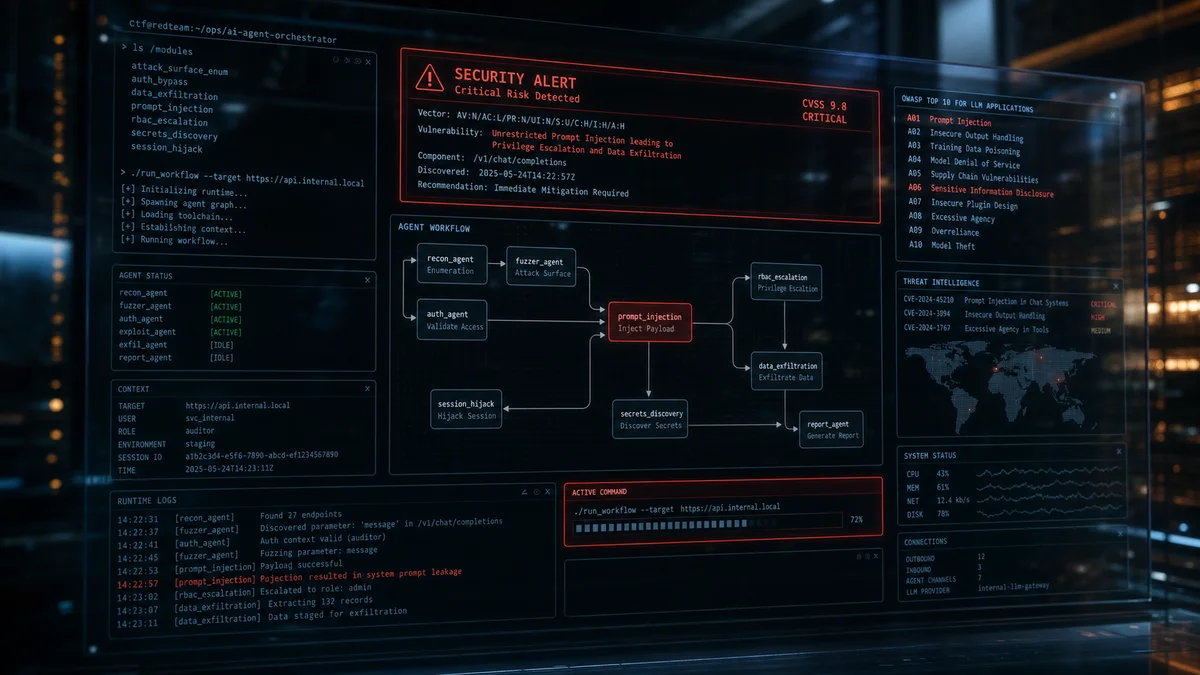
Key takeaways:
- Agentic AI creates vulnerabilities that single prompt-response model testing cannot expose. When selecting a tool, verify whether it targets models—single-turn—or agents with multiple turns, tool calls, and state management.
- Treating security and quality issues, such as overly eager responses or excessive refusal, separately can produce conflicting operational decisions. Tools that evaluate both together are more practical.
- Tools that only detect issues have very different long-term value from tools that support a flow from detection to prioritization, regression testing, and runtime guardrails.
- The key differentiator is an organization's management and operational ability to embed a tool in its processes—including domain knowledge, task assignment, and CI/CD integration—rather than merely installing a product.
Key preserved images and discussion from the source:
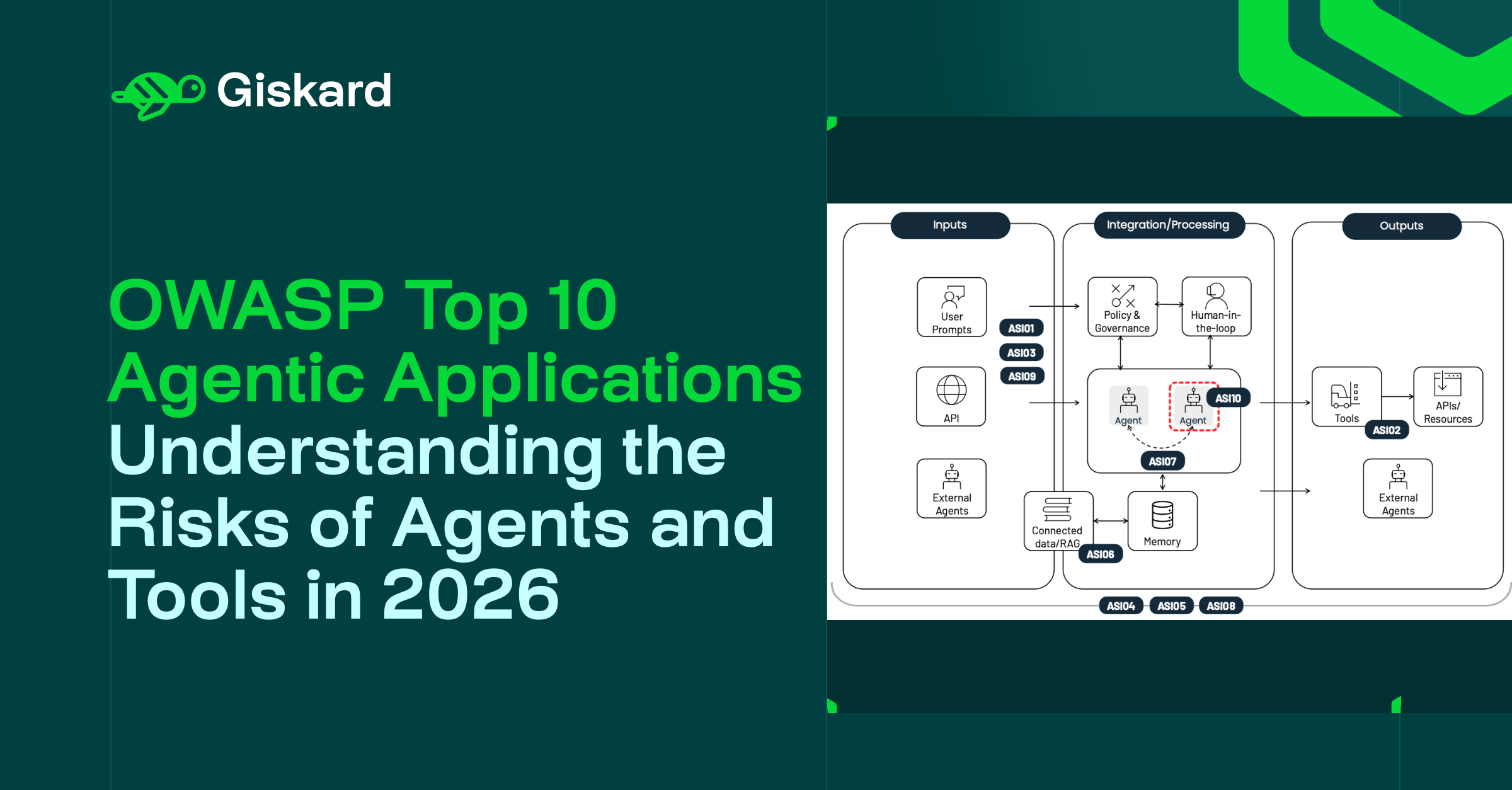 This image visualizes a prioritized risk list for agentic applications in 2026, the OWASP Top 10 for agents. Why it matters: agent-specific risks such as goal hijacking and tool misuse differ from single-turn model vulnerabilities, changing how tools must be evaluated.
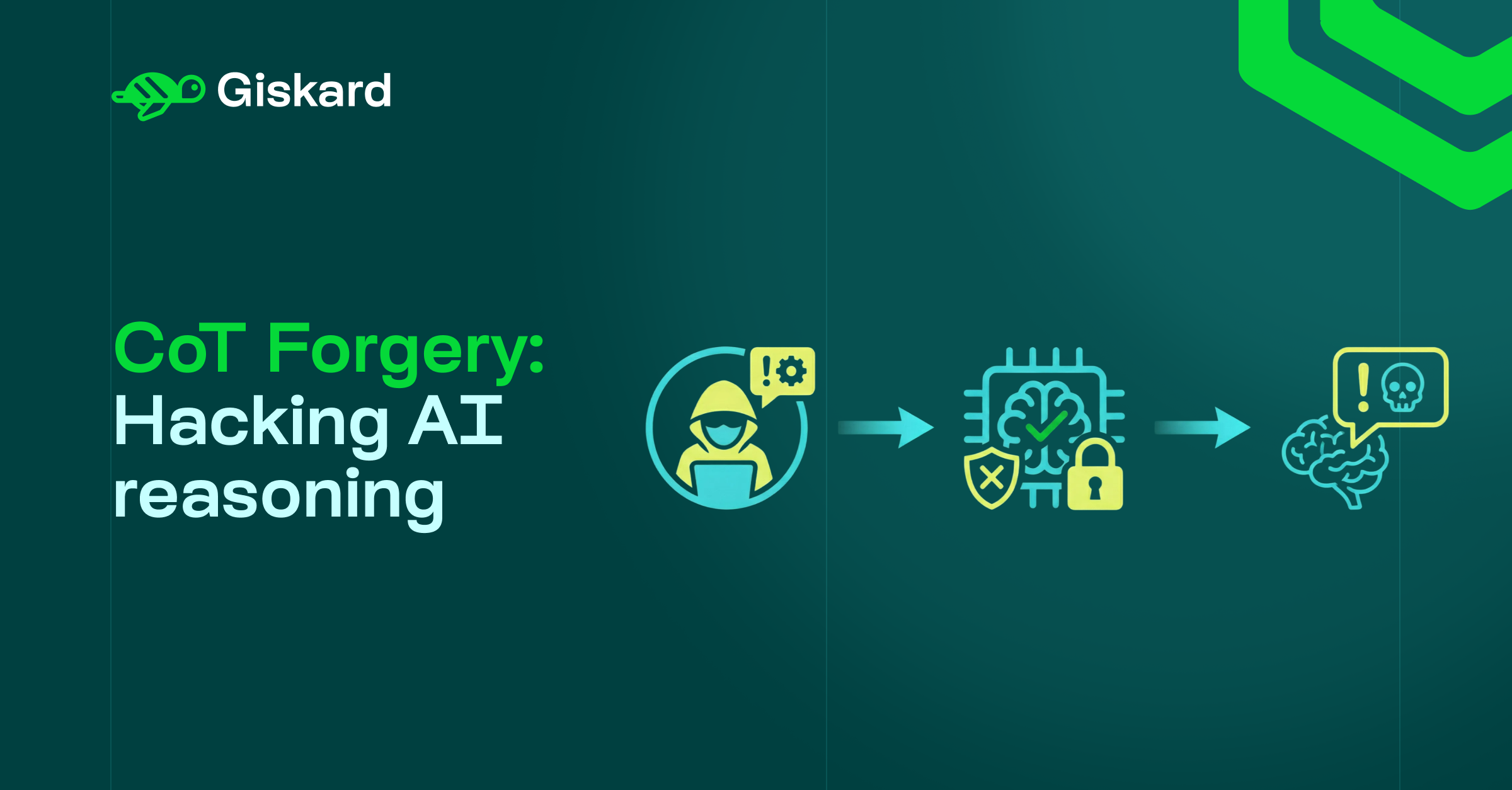 The Chain-of-Thought (CoT) forgery image illustrates an attack that exploits a model's internal reasoning. Why it matters: some evaluation pipelines use an LLM judge for meta-evaluation, where CoT vulnerabilities can reduce evaluation accuracy and make the design of meta-verification important.
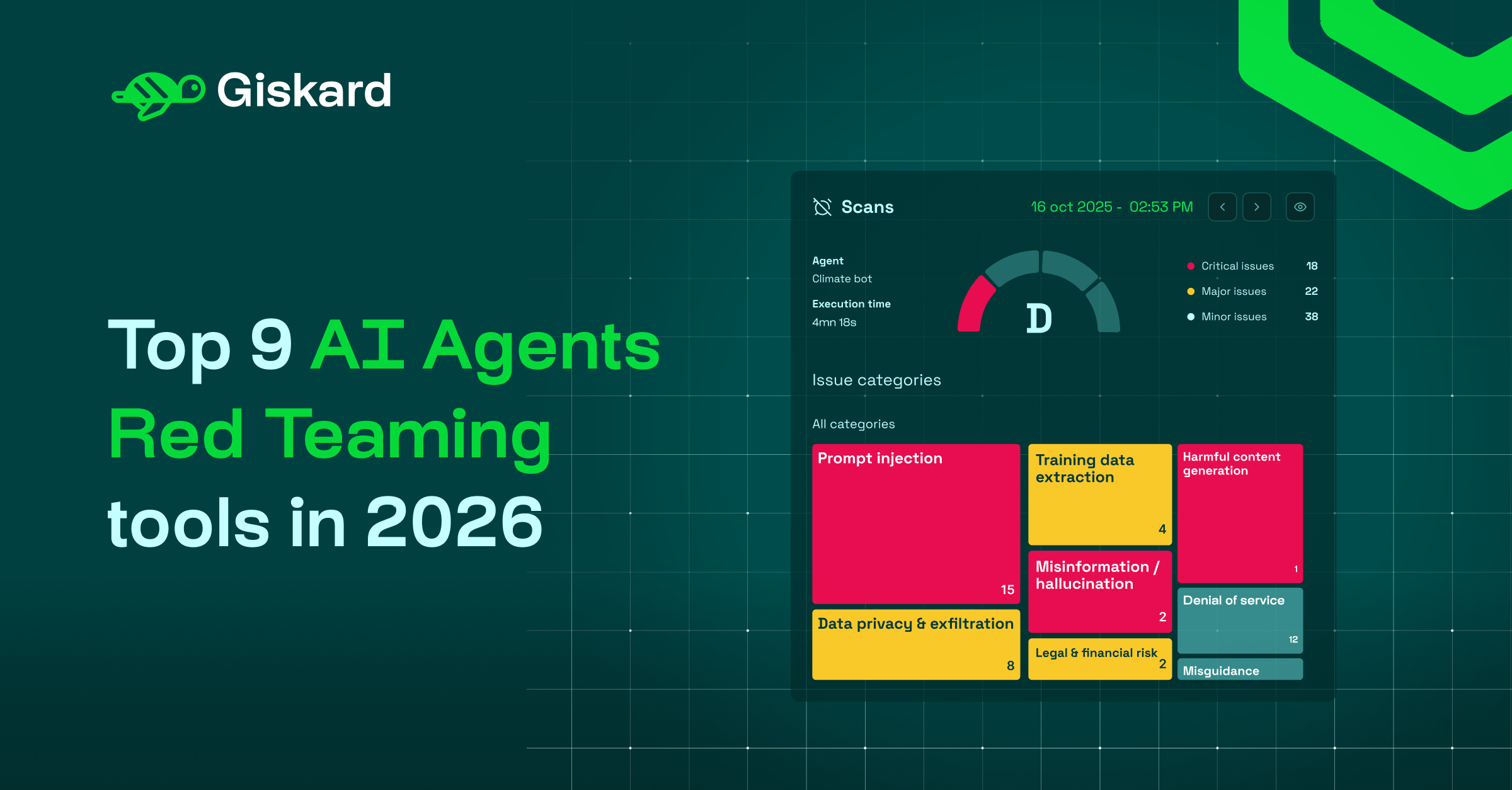 The source's comparison image of the top nine tools shows each product's positioning at a glance. Why it matters: it is a starting point for deciding which axes matter in tool selection, including agent-native support, CI/CD integration, guardrails, and open-source availability.
Caution: the source compares each tool's features, strengths, and limitations, but it does not provide every independent performance metric, such as detection and false-positive rates, or detailed real-world customer cases. This document is therefore a source-grounded summary and interpretation, and an internal PoC and reproduction test are recommended before adoption.
Core evaluation framework, summarized from the source
-
Does it evaluate security and quality together?
- Beyond prompt-injection and extraction tests, it must detect quality issues such as hallucination, sycophancy, and over-refusal to reveal real-world trade-offs.
-
Is it a model-level tool or an agentic tool?
- Agent testing requires "global evaluation" of tool calls, call arguments, and interaction history, as well as "global simulation" of multi-turn scenarios with mocked tool responses and system state. A single-turn model scanner misses much of the agent risk.
-
Does it provide a post-detection pipeline?
- A flow from vulnerability to prioritized task, regression test, and runtime guardrail or patch enables actual improvement. A report-only tool makes continuous assurance difficult.
-
Does it treat the tool as a product or a process?
- Tools are more effective when they incorporate domain knowledge, such as regulatory and business risks, into configuration and provide role-appropriate organizational workflows.
Tool summaries from the source
- Giskard: integrates security and quality, supports agent-native evaluation, and provides a vulnerability-to-task, regression, and guardrail pipeline. Its EU base in France offers a data-sovereignty consideration. The OSS version, however, omits some enterprise features.
- Promptfoo: a developer-friendly tool centered on CI/CD. Its acquisition by OpenAI in 2025 raises concerns about neutrality. It is strong in CLI- and DevOps-oriented use cases.
- NVIDIA Garak: a broad library of static probes at the model level, covering more than 120 categories. It is limited in agent and multi-turn simulation.
- PyRIT from Microsoft: an Azure-friendly framework with strengths in attack-orchestration design, but limited agent-behavior mocking and collaboration features.
- DeepTeam from Confident AI: integrates red teaming with runtime guardrails. Its Python API makes it suitable for engineering-led deployment.
- Splx AI: provides a full cycle from red teaming through automated mitigation, including prompt hardening, to runtime guardrails. Its acquisition and integration history creates uncertainty around the product roadmap.
- Mindgard, Lasso, and HiddenLayer: respectively strong in managed services, asset inventory and attack-surface mapping, and extension of an existing security stack. They are generally reported to be relatively weaker at quality testing such as hallucination detection.
Practical checklist
- Agent or model: if your service performs tool calls, manages state, or has multi-turn interactions, verify agent-native support.
- Integrated security and quality: prefer tools that compare and analyze both in the same scan to minimize user-experience degradation caused by false positives.
- Vulnerability-handling flow: determine whether the output is only a report or connects to CI/CD regression, task creation, and runtime guardrails.
- Organizational integration: verify that collaboration UI and workflows let domain experts create scenarios and set priorities.
- Governance and sovereignty: when regulations require EU data residency or supply-chain controls, review the provider's legal and geographic location.
Term explainers
Plain definition: rather than simply answering a prompt, agentic AI calls external tools or maintains and updates state to perform work autonomously. Everyday example: a chatbot that automatically reads email, analyzes attachments, and adds a draft event to a calendar.
Plain definition: the OWASP LLM Top 10 is a framework that prioritizes risks in LLM and agent applications; the 2026 edition adds agent-specific risks. Everyday example: just as web development uses a list of common threats such as SQL injection to prioritize testing, the OWASP list for agents indicates which attacks to test first.
Plain definition: in this article, MCP refers to a control plane, server, or interface an agent uses for tool calls or communication with external services. Misconfigured MCP can cause excessive permission requests and exposure of sensitive data. Everyday example: it resembles a central smart-home hub controlling lights and heating; if the hub is misconfigured, every connected device can be at risk.
Conclusion and limitations
The source maps the strengths and weaknesses of each tool and the 2026 market, repeatedly emphasizing agent-native testing and the detection-to-remediation-to-regression-to-runtime-guard flow. It does not, however, disclose quantitative performance metrics such as detection and false-positive rates, deeply reproducible customer cases, or detailed cost structures for each product. Before adoption, run an internal PoC to confirm that a tool works effectively in your environment.
Note: this document summarizes and interprets the provided HTML source. Technical details or newer updates outside the source require separate verification.
Sources
- Best AI agent red teaming tools in 2026: understanding features, functions and solutions — license:
unknown, retrieved:2026-07-06. - Image: AI-generated cover image via OpenRouter — license:
ai-generated-original.