p4r4d0xb0x
Rustacean, AI, OSS Enthusiast
View all authors

Qdrant: Overview of a High-Performance Vector Search Engine


· 6 min read
p4r4d0xb0x
Rustacean, AI, OSS Enthusiast

Qdrant is a "vector similarity search engine" and vector database that provides production-oriented features for embedding-based search, recommendation, and matching applications. It supports high-performance similarity search over stored points—vectors plus JSON payloads—and is designed to satisfy real-service requirements through filtering, faceting, hybrid search combining dense and sparse vectors, quantization, and distributed deployment. According to the repository description and documentation, Qdrant is written in Rust to target performance and reliability under heavy load. It also offers Qdrant Cloud as a managed service and Qdrant Edge as a lightweight version embedded within an application. The source repository provides a Quick Start, APIs through OpenAPI, a gRPC interface, a Web UI, and client libraries for Python, Go, JavaScript, Rust, and other languages.


How Reasoning Effort Affects First-Try Reliability in Agentic Code Generation More Than Tool Access — An Observational-Study Summary

· 6 min read
p4r4d0xb0x
Rustacean, AI, OSS Enthusiast

This post provides a technical summary and practical interpretation of Achint Mehta's 2026 observational study, Reasoning effort, not tool access, buys first-try reliability in agentic code generation (arXiv:2607.02436v1). The paper observed 90 independent agent runs tasked with implementing a real-time retrospective board from the same specification. It evaluated functional scores and visual quality against 14 fixed criteria for a maximum of 42 points. The central result is that capability tier and reasoning effort decisively affect first-try success, while merely adding testing tools increased cost.

ReContext: Improving Long-Context Reasoning through Recursive Evidence Replay

· 5 min read
p4r4d0xb0x
Rustacean, AI, OSS Enthusiast

ReContext, or RECONTEXT, is a training-free inference-time technique for helping a large language model use relevant information already present in its input more effectively. The source paper, for which only the arXiv abstract and metadata are currently available, is summarized as using the model's internal relevance signals to construct a query-conditioned evidence pool and replaying that evidence before final generation.

The First Question After the Transformer: Are RNNs Really Finished?

· 6 min read
p4r4d0xb0x
Rustacean, AI, OSS Enthusiast

The 2017 Transformer changed a basic assumption of sequence models. Machine translation first demonstrated the claim that a model that "looks all at once and selects important relationships" could scale better than a model that "reads in order," and the Transformer subsequently became the standard architecture of the LLM era. A standard architecture always carries costs, however. As context grows longer, attention computation and memory use increase, while system design for inference centers on the cache needed to keep referring to tokens that have already passed.

Looking at the ICLR discussion of Transformer alternatives, an interesting first question is not "Should we make the Transformer larger?" but "What remains if we redesign the RNN that preceded the Transformer?" In Were RNNs All We Needed?, Leo Feng and colleagues propose minLSTM and minGRU, minimal versions of LSTM and GRU, and argue that the older recurrent family can achieve both parallel training and competitive performance.

Statey: A Shared Database Inside AI Chat, Based on MCP

· 5 min read
p4r4d0xb0x
Rustacean, AI, OSS Enthusiast

Over the past several years, developers, product teams, and conversational-AI users have moved the center of their work into chat. Statey follows this trend with a database design that allows records such as tickets, customers, and documents to be stored, queried, and changed inside MCP (Multi-Client Protocol) chat sessions rather than through a separate UI. This article organizes Statey's architectural ideas and the technical questions that should be reviewed from practical integration and operational perspectives.

trajeckt: A Sealed-Commitment Runtime Enforcement Gateway for Agents

· 7 min read
p4r4d0xb0x
Rustacean, AI, OSS Enthusiast

trajeckt is a runtime-enforcement gateway designed to address the blind spot in traditional approaches that evaluate every tool call from an agent independently. According to the supplied repository materials, its main idea is to "compile permitted trajectories into a sealed graph before agent execution, then fail closed by checking every call during execution against the graph's currently reachable frontier." The approach aims to fill the structural gap in existing systems that cannot detect a multistep data-exfiltration scenario from any single call.

uv: An Analysis of the Rust-Built, Extremely Fast Python Package and Project Manager

· 5 min read
p4r4d0xb0x
Rustacean, AI, OSS Enthusiast

cover

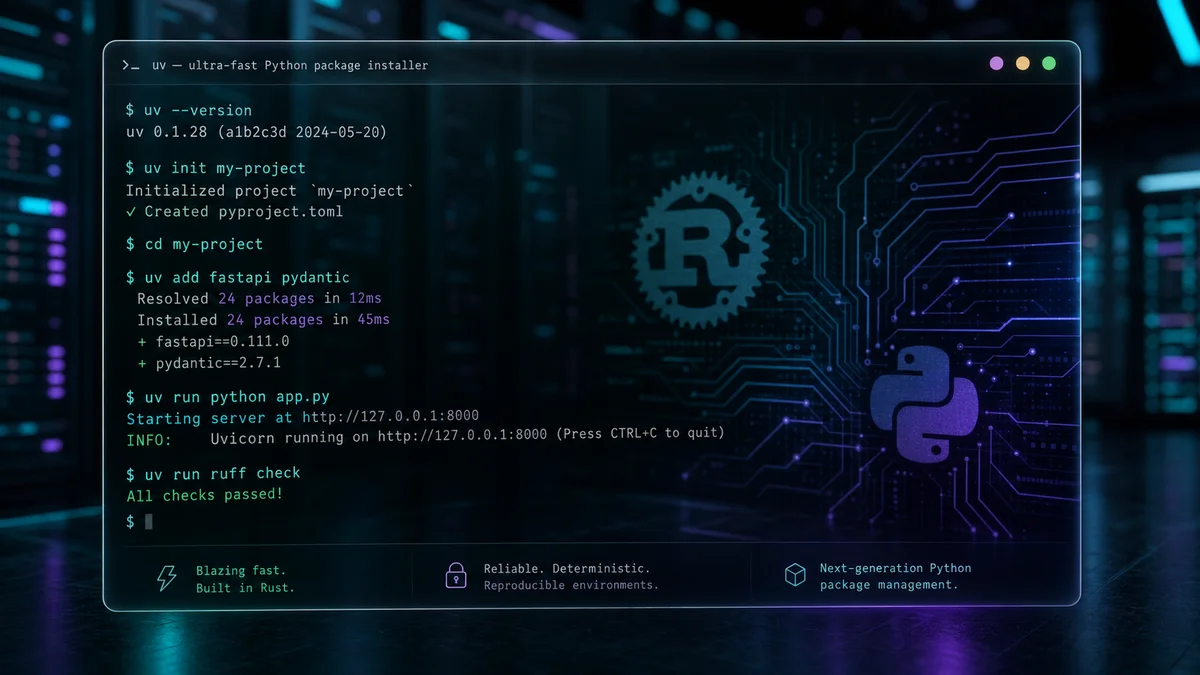
uv is a Python package and project management tool developed by Astral and implemented in Rust. Drawing on the README and repository files (the install script, BENCHMARKS.md, documentation links), this post summarizes uv's main design goals, its features, and the trade-offs a developer should weigh. The analysis is based on the provided repository snippets and README; for implementation details and the latest benchmarks, consult the official documentation and the repository sources directly.

Valmis: Analysis of a Security-Centered AI Agent Platform

· 7 min read
p4r4d0xb0x
Rustacean, AI, OSS Enthusiast

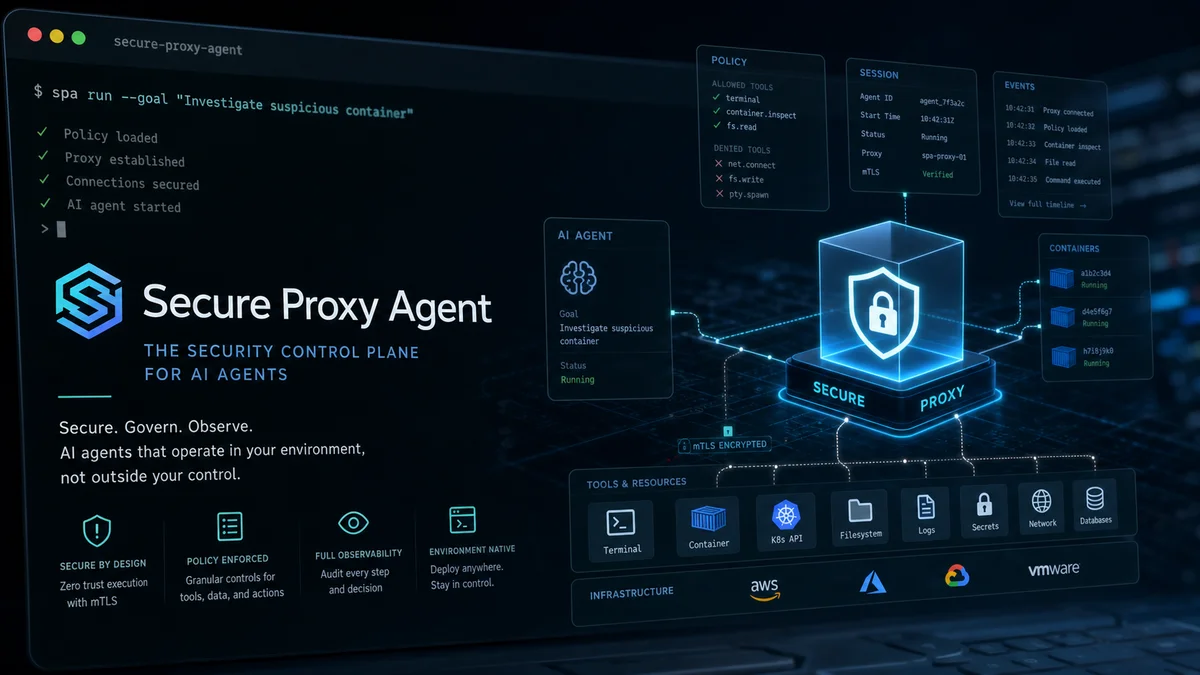
Valmis is an open-source project designed to operate AI agents for work in cloud environments. The submitted repository—its README and related files—reveals these central points: agents run in independent containers, while credentials and external requests pass through a host-side proxy so that the LLM and agent runtime cannot access sensitive keys directly. It also supports multistep workflows, more than 100 business integrations, browser automation, and memory and embeddings based on pgvector.

CheatSheet as Operational Memory

· 3 min read
p4r4d0xb0x
Rustacean, AI, OSS Enthusiast

A CheatSheet is more than a collection of commands. Bringing frequently searched procedures, commonly mistaken options, and decision criteria together in one place turns it into operational memory for a personal workflow. This is also the first card-style post used to validate the new QL.GL blog format.