p4r4d0xb0x
Rustacean, AI, OSS Enthusiast
View all authors

When LLM Personas Do and Do Not Support Visualization Design — A Cross-Model Study of Color Assignment and Chart Choice

· 4 min read
p4r4d0xb0x
Rustacean, AI, OSS Enthusiast

cover

This post summarizes and offers a practical interpretation of Shahreen Salim and Klaus Mueller's 2026 arXiv paper "When Do LLM Personas Support Visualization Design? A Cross-Model Study of Color Assignment and Chart Choice" (arXiv:2607.02455v1). Using 43 Big Five personality profiles as personas, the study compared (1) color assignments to concepts and (2) chart-idiom preferences in task contexts across three LLM configurations: GPT-4o-mini, GPT-4.1-mini, and GPT-5-mini. The central observation is that the model configuration and concept type determine the presence and strength of persona signals.

Will Scaling Improve Social Simulation with LLMs?

· 5 min read
p4r4d0xb0x
Rustacean, AI, OSS Enthusiast

This post presents a technical summary of the 2026 arXiv paper "Will Scaling Improve Social Simulation with LLMs?" by Ziems et al. and analyzes the implications of its findings for practice and future research. The paper empirically investigates how much increasing model size and compute scale, such as FLOPs, contributes to simulation fidelity when large language models are used for social simulation.

Mamba-3: Improved Sequence Modeling Using State Space Principles — Key Ideas and Technical Implications

· 6 min read
p4r4d0xb0x
Rustacean, AI, OSS Enthusiast

Mamba-3 is recent research that aims to improve both the quality and inference efficiency of linear and near-linear sequence layers from a state space model (SSM) perspective. The paper combines three methodological contributions—exponential-trapezoidal discretization, complex-valued state updates, and a MIMO variant—and reports experimental improvements in state-tracking ability, language-modeling performance, and hardware utilization during inference. This article summarizes and interprets the supplied evidence pack, including the abstract, important sections, and evidence excerpts. It notes that the pack may not contain every original implementation and experimental detail or figure.

Mira — A Self-Hosted AI Code Reviewer: Overview, Deployment, and Operations

· 6 min read
p4r4d0xb0x
Rustacean, AI, OSS Enthusiast

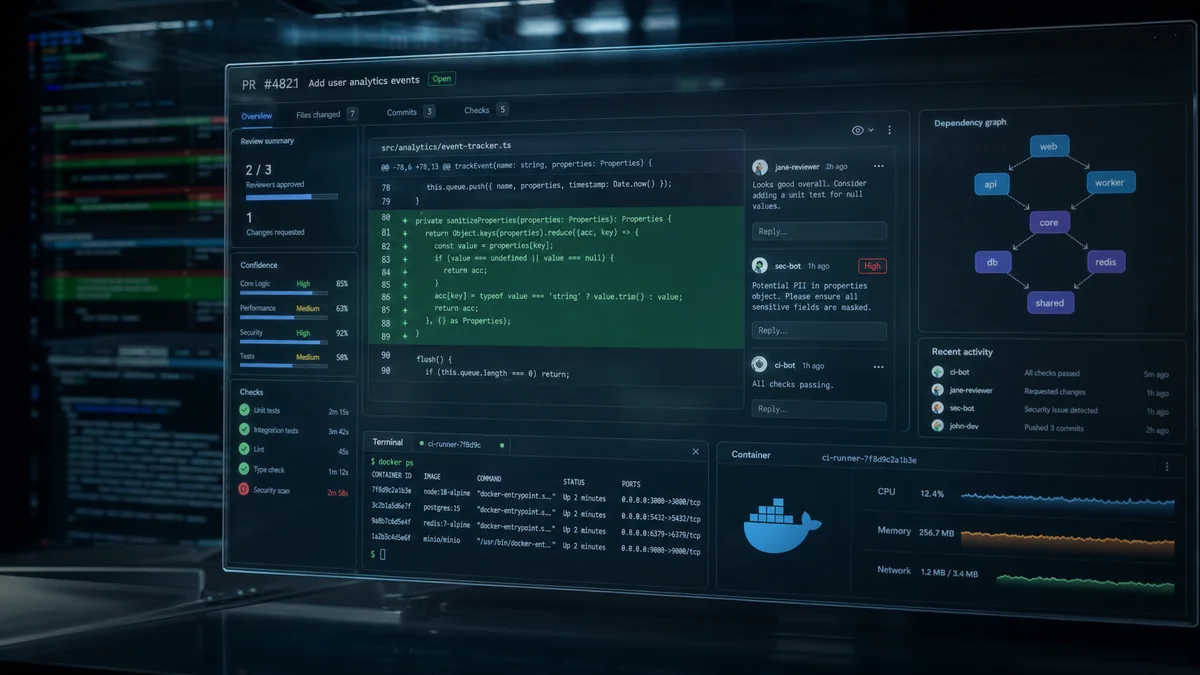
Mira is a "self-hosted AI code reviewer" available as open source, according to its repository README and FEATURES documentation. Its advertised capabilities include index-backed reviews that provide full-codebase context, CVE/OSV vulnerability scanning, organization-wide package search, dashboard telemetry, and a pipeline that automatically reviews PRs using user-provided LLM keys. The repository includes deployment Docker images, example configurations for Railway, Fly.io, and Render, SQLite and Postgres support, and per-repository settings through .mira.yaml.

The NautilusTrader Engine: Analyzing Rust-Native Research-to-Execution Parity

· 7 min read
p4r4d0xb0x
Rustacean, AI, OSS Enthusiast

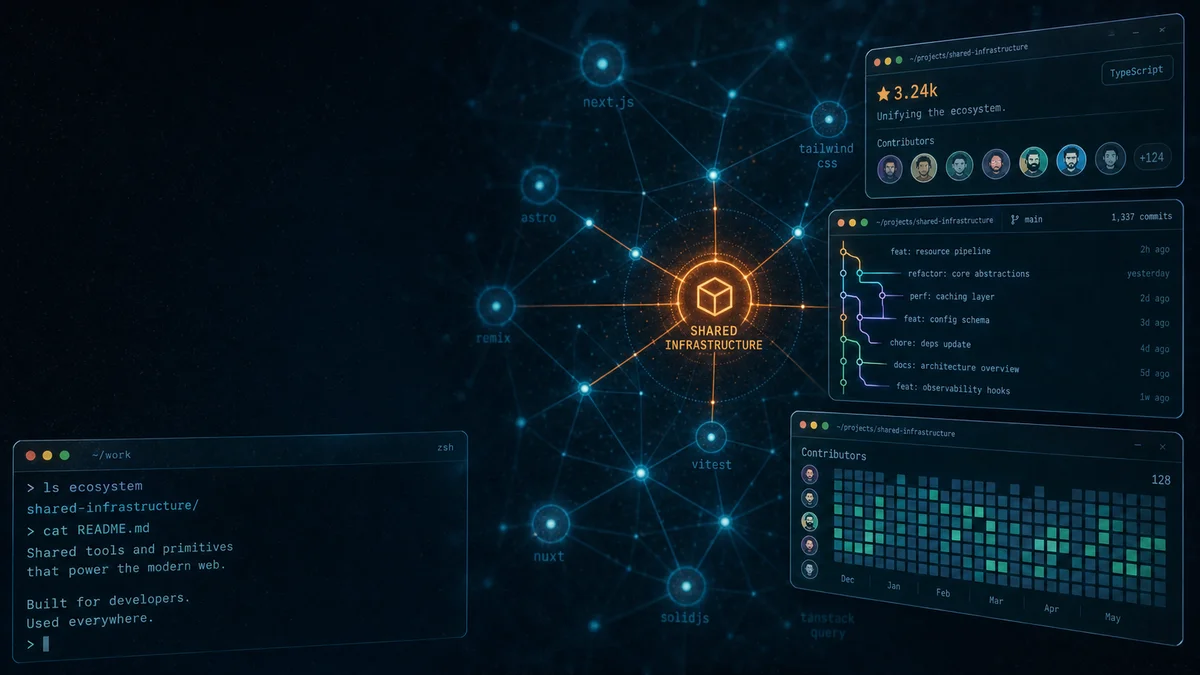
According to its README and repository metadata as of July 6, 2026, NautilusTrader describes itself as an "open-source, production-grade, Rust-native engine for multi-asset, multi-venue trading systems." Drawing on the public repository text, this article analyzes the architectural intent and the implications of its design choices for research-to-production parity workflows.

Neuron-Aware Data Selection for Annotation-Free LLM Self-Distillation — Summary and Technical Commentary

· 7 min read
p4r4d0xb0x
Rustacean, AI, OSS Enthusiast

This article is a technical summary and commentary based on the abstract and metadata of Chen and Li's 2026 arXiv paper "Neuron-Aware Data Selection for Annotation-Free LLM Self-Distillation." The authors propose Neuron-OPSD, or Neuron On-Policy Self-Distillation, a data-centric, annotation-free framework that uses internal neuron-activation information to select training data for self-distillation and construct the teacher context. According to the abstract, the method improves in-domain task performance on specialized-domain benchmarks while preserving cross-domain generalization and mitigating calibration collapse.

Adoption and Ecosystem Health of Open-Source Multi-Agent Frameworks: A Longitudinal Analysis

· 5 min read
p4r4d0xb0x
Rustacean, AI, OSS Enthusiast

This article is an interpretation and summary based on the abstract and metadata of the arXiv paper "Adoption and Ecosystem Health: A Longitudinal Analysis of Open-Source Multi-Agent Frameworks." The paper reports evaluating ecosystem health across 15 major OSS agent frameworks from late 2022 to early 2026 by analyzing 808,042 stars, 73,997 pull requests, 86,241 commits, and 987,330 user profiles. Its main findings can be organized around three summarized perspectives: (1) problems with the reliability of star counts, (2) a mismatch between visibility and adoption depth, and (3) contributor-retention patterns. The statistics and figures presented in the abstract are based on this evidence pack—the abstract and metadata—while the original PDF should be consulted for the detailed methodology and additional analyses.

Program-as-Weights: A Programming Paradigm for Fuzzy Functions

· 6 min read
p4r4d0xb0x
Rustacean, AI, OSS Enthusiast

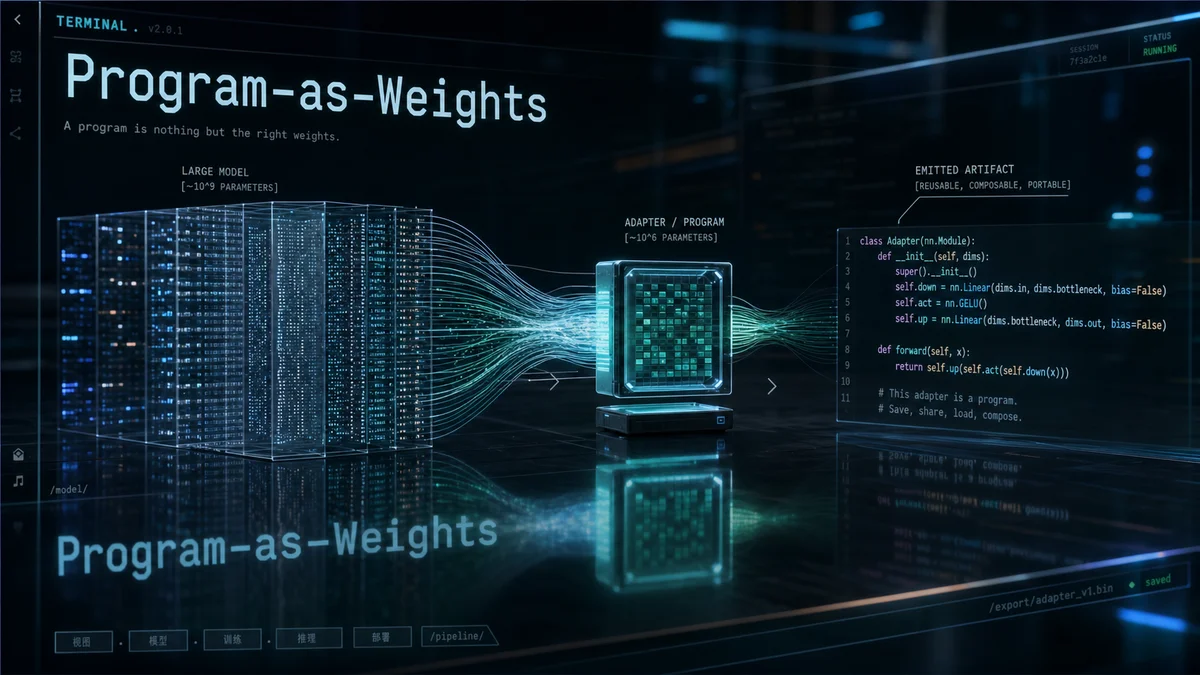
This technical review organizes the central idea and practical implications of the paper Program-as-Weights: A Programming Paradigm for Fuzzy Functions, based on its abstract and metadata published on arXiv on July 2, 2026. The abstract proposes the Program-as-Weights (PAW) paradigm and reports that fuzzy functions defined in natural language can be compiled into small, reusable neural artifacts for low-cost local execution. This review focuses on the claims and figures stated in the abstract and recommends consulting the full PDF for detailed experiments and hyperparameters.

prompts.chat Analysis: An Open-Source Prompt Library with Self-Hosting Options

· 7 min read
p4r4d0xb0x
Rustacean, AI, OSS Enthusiast

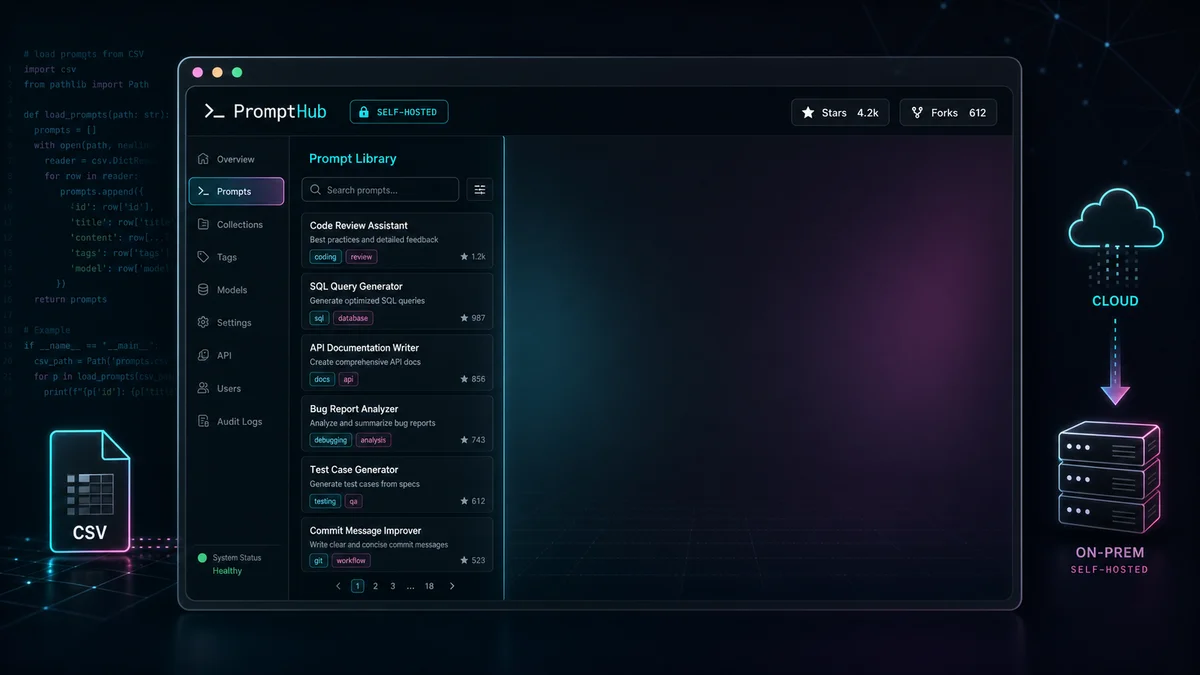
prompts.chat is a community-contributed prompt collection distributed through the f/prompts.chat GitHub repository and a separate web interface at prompts.chat. This article summarizes and interprets its features, licenses, deployment options, and integration points based on the supplied GitHub repository snapshot, including README, SELF-HOSTING.md, PROMPTS.md, and portions of related pages. It prioritizes facts confirmed in the documentation and explicitly marks some implementation details as uncertain when they are absent from the supplied evidence.